For decades, Africa has supplied raw materials, engineers, and a booming digital market to the global technology economy, but has remained on the sidelines of semiconductors, arguably the most strategically important technology of our time. That may be starting to change.
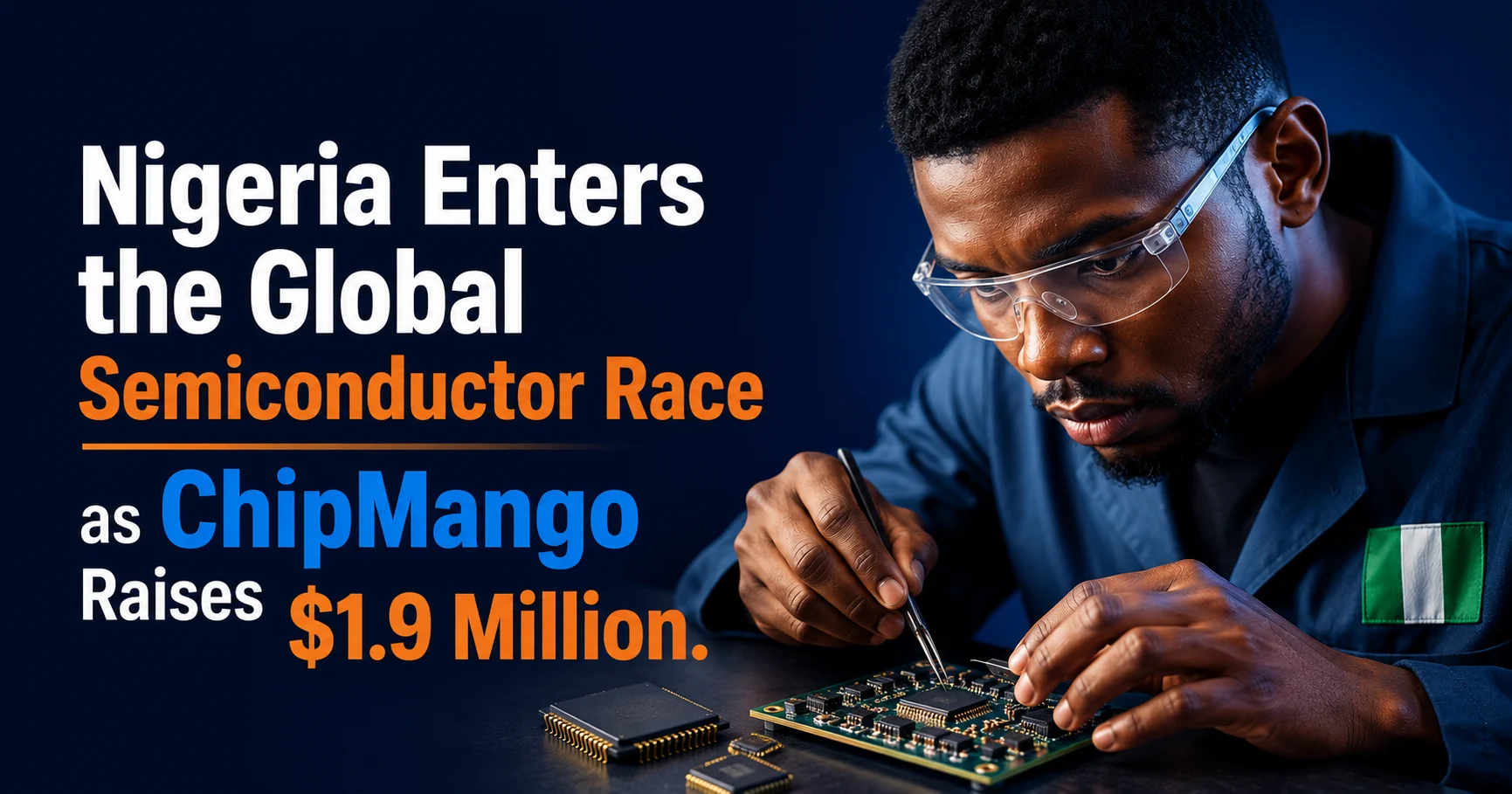
ChipMango, a Nigerian founded semiconductor company, has raised $1.9 million in seed funding, led by Atlantica Ventures, to expand chip design operations and build engineering talent across Africa, Europe, and the United States. The amount is modest, but the signal matters. Artificial intelligence, electric vehicles, data centers, and advanced telecommunications are driving unprecedented demand for specialized chips, and African countries are recognizing that controlling technology means more than building software on hardware designed elsewhere.
Nigeria’s Starting Point
Nigeria is not new to electronics. Universities and engineers have long worked in embedded systems and microelectronics. However, the country has never built a competitive semiconductor industry, held back by weak research infrastructure, costly design tools, unreliable power, and a limited number of engineers with commercial chip design experience.

Nigeria’s strength has been in software, financial technology, and telecommunications, using chips built elsewhere rather than designing or manufacturing them domestically.
The real value in semiconductors sits deeper in the chain: intellectual property, architecture, design, verification, fabrication, and packaging. That is the gap ChipMango is targeting.
In June 2026, Nigeria’s Raw Materials Research and Development Council partnered with Africhip to develop the sector from raw materials through chip design. This is a sign that the country is starting to treat semiconductors as a strategic industry rather than simply an import dependent sector.
Why Chip Design, Not Fabrication
Building a semiconductor fabrication plant costs billions of dollars and requires specialized equipment, huge amounts of power and water, and highly skilled engineers. This is not a realistic starting point for Nigeria.
Instead, ChipMango is pursuing a fabless model, designing chips and intellectual property while external foundries handle manufacturing.
Its funding will support engineering, commercial chip design, and an educational platform focused on edge computing and intelligent sensors. The bigger goal is not simply to create one successful startup. It is to produce thousands of engineers who can design chips for the global market, starting with partnerships at universities such as the University of Lagos.
Nigeria Isn’t Alone
Several African countries are building semiconductor strategies, with each focusing on different strengths.
Kenya is pursuing semiconductor manufacturing, backed by support from the United States Trade and Development Agency for Silicon Technology Limited and leveraging its strong technology ecosystem.
Ghana is building indigenous chip design capabilities through Nelix Chip Design, with a focus on trusted computing and university partnerships.
Rwanda is positioning itself as a regional hub for semiconductor skills, computing infrastructure, and engineering, with support from ChipMango.
Egypt has been advancing electronics design since 2016 through its “Egypt Makes Electronics” initiative. The country’s experience shows that design and systems integration can create significant value without immediately pursuing advanced semiconductor fabrication.
South Africa is drawing on its deep industrial and research capabilities across the automotive, telecommunications, and renewable energy sectors to support a broader semiconductor ecosystem.
The World Economic Forum and the African Academy of Sciences have also identified these five countries as promising entry points through areas such as chip design, packaging, testing, mineral processing, and regional technology hubs.
From Minerals to Microchips
Africa already holds vast reserves of many minerals that the modern technology industry depends on. However, the continent has historically exported these resources in raw form and imported finished technology, capturing only a small portion of the overall value.
The opportunity now is to move further up the value chain:
Minerals → Components → Chip Design → Manufacturing → Packaging → Finished Technology
Capturing even a few additional stages could mean more jobs, intellectual property, technical expertise, and economic value remaining on the continent.
What This Could Mean
The $1.9 million raised by ChipMango will not build a semiconductor industry on its own. Its real value is in establishing a pipeline of engineers and technical expertise.
That could mean engineers designing chips for African telecommunications networks, sensors, medical devices, industrial equipment, and intelligent computing systems. It could also mean stronger university laboratories and new semiconductor startups licensing intellectual property to companies around the world.
This is a far more realistic trajectory than attempting to build an advanced fabrication industry from scratch. It also comes at a time when global demand for specialized processors, sensors, and edge computing technologies is increasing rapidly.
Africa therefore has an opportunity to enter the semiconductor industry through areas where its existing talent, universities, technology companies, and growing digital economy can provide an advantage.
The Catch
Nigeria has a history of ambitious technology initiatives being undermined by weak execution, unreliable infrastructure, and inconsistent policy.
Semiconductors require patience. The industry needs reliable electricity, strong connectivity, advanced design tools, intellectual property protection, research funding, skilled engineers, and, above all, continuity across political cycles.
Nigeria also should not attempt to build the entire ecosystem alone.
Kenya, Ghana, Rwanda, Egypt, and South Africa are each developing different capabilities. A more powerful outcome could emerge if African countries work together to create a connected African semiconductor supply chain, with countries specializing in areas where they have the greatest competitive advantages rather than attempting to duplicate one another.
The real question is not whether Africa can build chips. The question is how much of the global semiconductor value chain the continent can capture and whether Nigeria can help lead that transformation.
ChipMango’s $1.9 million may be a small investment compared with the billions required to build semiconductor fabrication plants, but its significance could extend far beyond the size of the funding.
If Nigeria can turn semiconductor investment into engineering talent, intellectual property, university research, startups, and global partnerships, the country could begin moving from being primarily a consumer of advanced technology to becoming a creator of the technology that powers the modern world.