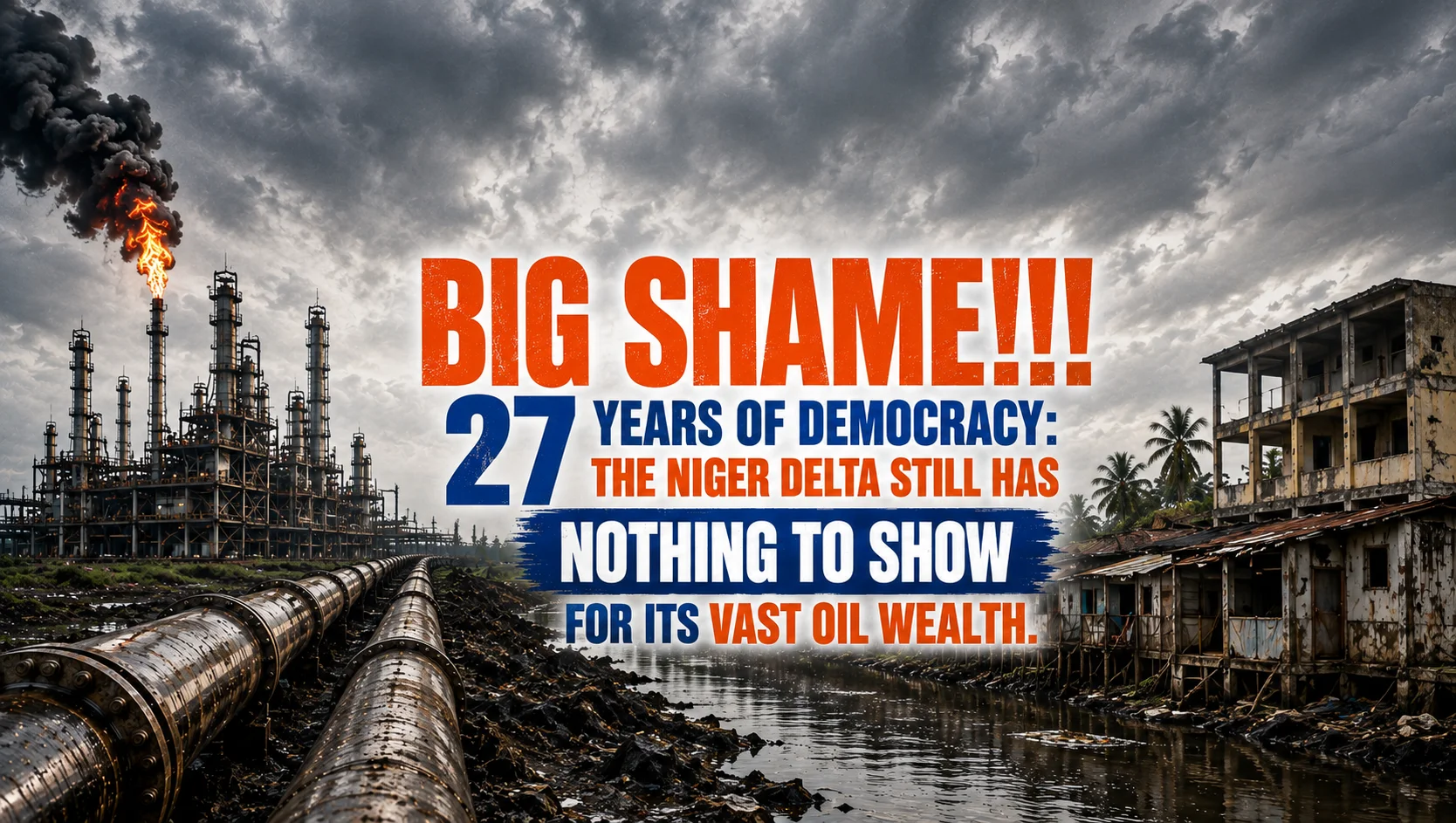
Twenty-seven years into Nigeria’s uninterrupted democratic era, the Niger Delta remains one of the country’s greatest contradictions. This is the region that produces much of the oil and gas revenue that sustains the Nigerian economy, yet many of its communities still struggle with poor roads, unreliable electricity, inadequate schools, unemployment and polluted waterways.
The question is no longer whether the Niger Delta has been neglected. The evidence is everywhere. The bigger question is why, after billions and trillions of naira have been allocated through governments, commissions, ministries and development programmes, meaningful transformation remains so difficult to see.
A Long History of Institutions Without Impact
Nigeria has never lacked institutions created to develop the Niger Delta. The Niger Delta Development Board was established in 1959. It was followed by OMPADEC in 1992 and the Niger Delta Development Commission (NDDC) in 2000. In 2008, the Federal Government created the Ministry of Niger Delta Affairs, while the Presidential Amnesty Programme followed in 2009.
On paper, the region has received considerable government attention. In reality, the multiplication of institutions has not produced the transformation people expected.
Too often, a new agency arrives with promises, receives huge allocations, becomes embroiled in controversy and is eventually restructured or replaced. Meanwhile, communities continue to wait for basic infrastructure.
The real problem, therefore, may not be the absence of institutions. It is the failure to make those institutions deliver measurable results.
Trillions Spent, Little to Show
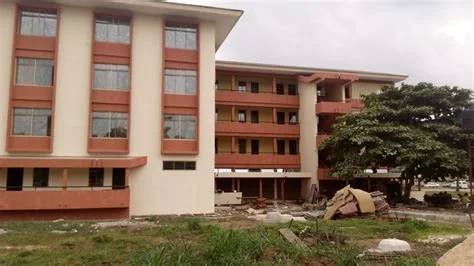
The amount of money that has passed through Niger Delta development institutions is enormous. Yet the region continues to struggle with abandoned projects, poor infrastructure and weak public services.
The NDDC forensic audit covering 2001 to 2019 reportedly raised serious questions about how enormous resources were spent and identified thousands of abandoned or undocumented projects.
If such amounts of money have been committed to development, Nigerians should be able to point to the roads, hospitals, schools, industrial parks, water systems and modern cities that resulted from that investment.
Instead, many communities still ask a simple question: Where did all the money go?
That question deserves a clear answer. Development funds should not disappear into bureaucracy, political patronage and abandoned contracts while the communities they were meant to serve remain impoverished.
No First-Class City to Show for the Wealth
Perhaps the clearest evidence of the region’s failure is its cities.
After decades of oil production and enormous revenues, the Niger Delta still cannot point to a truly world-class city that reflects the wealth generated from its soil.
Port Harcourt, Warri, Yenagoa, Uyo and other major cities have important economic and administrative roles, but they still struggle with flooding, poor drainage, inadequate public transportation, unreliable electricity, poor urban planning and weak infrastructure.
Compare this with cities such as Kigali, Nairobi and Accra. These cities were not built on the kind of oil wealth available to the Niger Delta. Their progress has been driven largely by deliberate planning, investment and stronger institutional discipline.
The lesson is simple: Natural resources do not build cities. Good governance does.
The Niger Delta does not need another collection of political promises. It needs a deliberate plan to build cities that can compete for investment, attract industries, create jobs and retain young talent.
Education in the Shadow of Oil Wealth
It is another painful contradiction that children in an oil-producing region can still attend schools without adequate classrooms, laboratories, libraries, furniture or electricity.
In many riverine communities, children face long journeys and difficult transportation just to access basic education.
The NDDC and other development programmes have funded scholarships, schools and skills centres, but the bigger issue is sustainability. Building a school is not enough. The school must have qualified teachers, equipment, electricity, internet access and a system that ensures students actually receive quality education.
The Niger Delta should be producing engineers, software developers, marine experts, technicians, entrepreneurs and scientists capable of building the next generation of industries in the region.
Instead, too many young people leave school without the practical skills needed to compete.
Unemployment, Skills Gaps and the Militancy Cycle
Oil and gas are capital-intensive industries. They generate enormous revenue but do not employ enough people to absorb the region’s growing youth population.
At the same time, traditional livelihoods such as fishing and farming have been badly affected in many communities by environmental degradation, oil spills and pollution.
This creates a dangerous combination: young people without quality education, without jobs and without a clear path into the modern economy.
Skills-acquisition programmes can help, but they must go beyond certificates. A young person trained in welding, ICT, marine engineering, renewable energy, construction or software development should leave with a pathway to employment, apprenticeship or entrepreneurship.
The region also needs to stop creating incentives that make militancy appear more rewarding than peaceful economic participation. Young people who choose education, skills and legitimate enterprise should not feel forgotten while those who resort to violence receive greater attention.
Corruption as the Common Thread
Across the region, the pattern is painfully familiar: money is allocated, contracts are awarded, projects are announced and, in too many cases, the promised results never materialise.
This is why the Niger Delta’s biggest problem may not be a lack of money but a lack of accountability.
There must be consequences for officials, contractors and institutions that misuse development funds. Audits should not simply be published and forgotten. They should lead to investigations, prosecutions and recovery of stolen public resources where wrongdoing is established.
Communities should also have a greater role in monitoring projects. The people who live where a road, school or hospital is being constructed are often in the best position to know whether the project is actually being delivered.
Corruption as the Common Thread
Across the region, the pattern is painfully familiar: money is allocated, contracts are awarded, projects are announced and, in too many cases, the promised results never materialise.
This is why the Niger Delta’s biggest problem may not be a lack of money but a lack of accountability.
There must be consequences for officials, contractors and institutions that misuse development funds. Audits should not simply be published and forgotten. They should lead to investigations, prosecutions and recovery of stolen public resources where wrongdoing is established.
Communities should also have a greater role in monitoring projects. The people who live where a road, school or hospital is being constructed are often in the best position to know whether the project is actually being delivered.
What Genuine Progress Would Require
The Niger Delta does not need another rebranded agency or another political slogan. It needs results. Existing audit findings should be made public, and credible allegations should be properly investigated. Project selection should involve the communities that will benefit from them. Contracts should be transparent, independently monitored and tied to measurable outcomes.
Education must become practical and future focused. The region should invest heavily in technical colleges, vocational schools, software engineering, robotics, renewable energy, marine technology, agriculture and modern manufacturing.
Most importantly, the Niger Delta needs cities designed for the future.
Imagine Port Harcourt, Warri, Yenagoa and other major cities with reliable power, modern drainage, efficient public transportation, technology hubs, industrial parks, clean waterfronts, quality schools and hospitals, and an environment capable of attracting international investors.
That transformation is possible.
The region has the resources, the people and the strategic importance to become one of Africa’s strongest economic zones. What has been missing for 27 years is not another development plan.