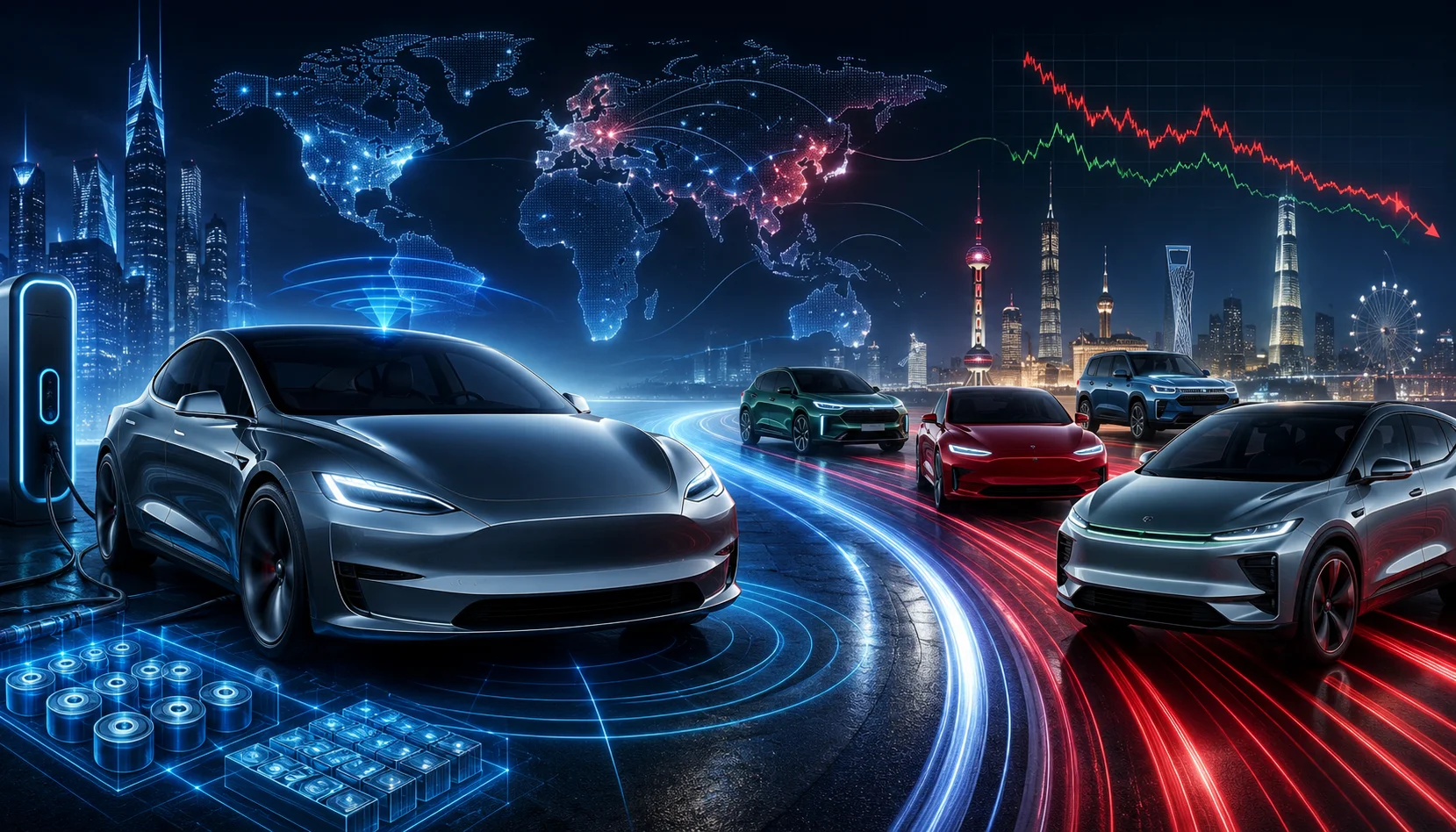
For more than a decade, Tesla was the name most associated with electric vehicles. Elon Musk’s company did more than sell cars, it helped transform the global auto industry and pushed EVs (Electric Vehicles) into the mainstream.
However, the electric vehicle market is entering a new era. Recent sales figures show that Tesla’s dominance is facing its biggest challenge yet, as Chinese automakers, led by BYD, continue to expand their global presence and compete aggressively on price, technology, and production scale.
In 2025, Tesla lost its position as the world’s top-selling EV manufacturer by annual deliveries, with China’s BYD taking the lead after years of rapid growth. Tesla’s vehicle sales declined, while Chinese EV makers increased their market share across several international markets.
BYD Has Taken the Global EV Crown
The headline numbers are hard to ignore. According to CNBC‘s reporting on full-year 2025 results, BYD’s battery-electric vehicle sales rose nearly 28% year over year to roughly 2.26 million units, while Tesla’s global deliveries fell by about 8% to 1.64 million units. This marked the first time BYD had outsold Tesla on a calendar-year basis, officially ending Tesla’s run as the world’s top EV seller.
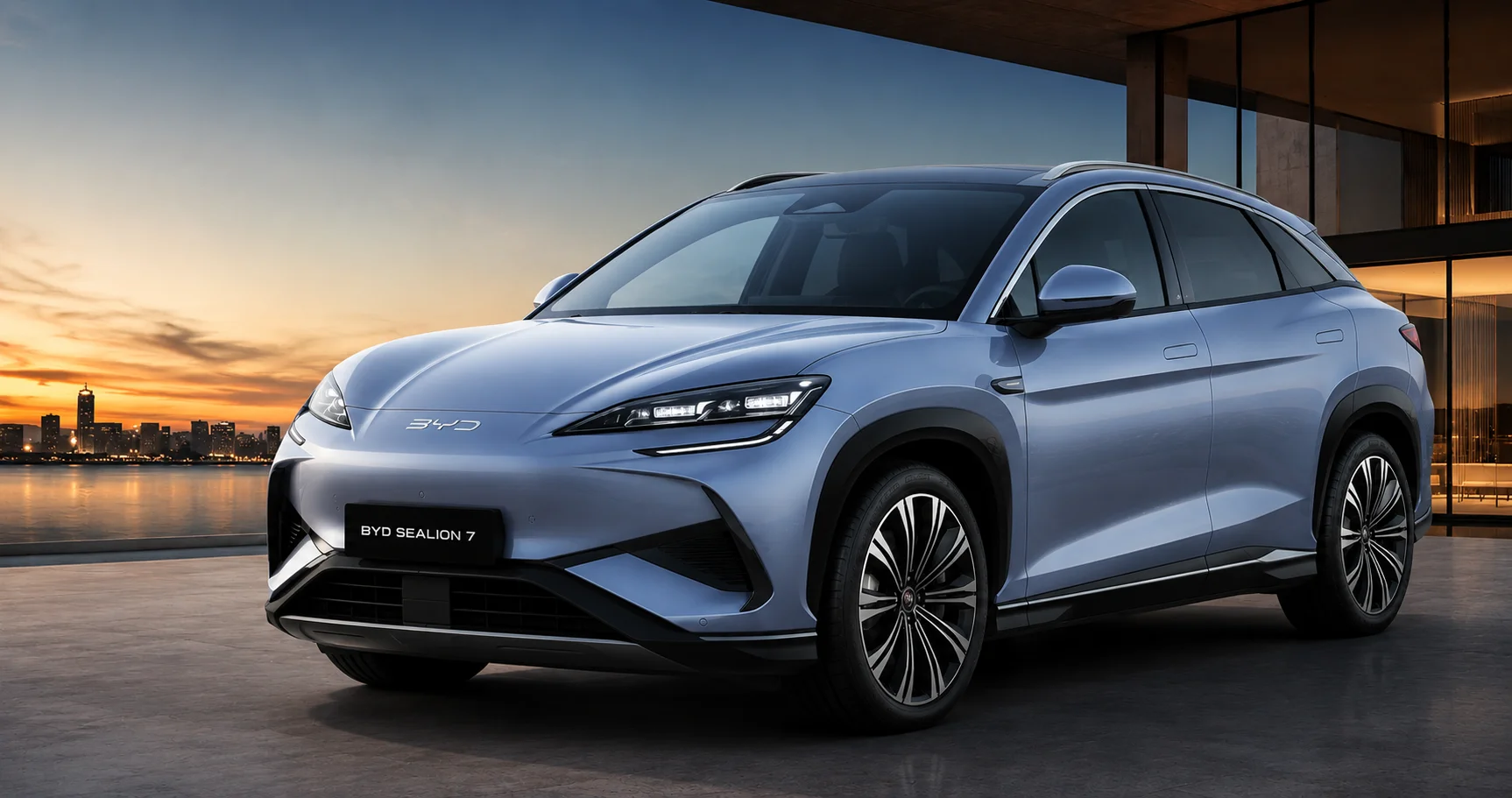
It was not a one-time event. Tesla’s annual deliveries have now declined for two consecutive years, falling from 1.79 million vehicles in 2024 to around 1.63–1.64 million in 2025. Industry watchers attribute this decline to factors such as the loss of the U.S. federal EV tax credit and increasing competition from Chinese automakers.
The rivalry has continued into 2026. In the second quarter, BYD delivered 557,090 battery-electric passenger vehicles compared with Tesla’s 480,126, giving BYD a lead of roughly 16%, even though Tesla recorded its strongest Q2 performance ever.
Europe: A Complete Reversal
Once a Tesla stronghold, Europe now favors BYD:
- Tesla’s EU/UK registrations fell for 13 straight months through early 2026, dropping 17% year-over-year in January to just 8,075 units (0.8% market share).
- BYD’s registrations jumped 165% that same month, more than doubling its share to 1.9%.
- Full-year 2025: Tesla fell 27% to ~238,656 units; BYD surged 269% to 187,657 units.
- By mid-2026, BYD had overtaken Tesla in cumulative European share (2.3% vs. 2.0%).

This wider choice naturally reduces Tesla’s control over the market.
CNBC-cited analysts point to Tesla’s aging lineup, backlash tied to Musk’s political profile, and a flood of affordable new EVs from BYD, MG, and Zeekr.
Why Tesla is losing the Lead
One major reason Tesla is losing ground is that Chinese automakers are offering cheaper vehicles with more variety, advanced features, and faster product updates. While Tesla still depends heavily on its popular Model 3 and Model Y, competitors are releasing new models across different price ranges, giving customers more choices.
Tesla’s product lineup is also becoming a weakness. The company has not introduced a new mass-market vehicle in years, while rivals continue to innovate rapidly. At the same time, the removal of some EV incentives has made Tesla vehicles less attractive to price-conscious buyers.
Tesla’s technology advantage is also shrinking. Companies like BYD have developed competitive battery technology, including its Blade Battery, which offers improved safety, efficiency, and charging performance. This has reduced Tesla’s once-clear lead in EV innovation.
Beyond technology and pricing, Tesla’s brand image has faced challenges due to Elon Musk’s political controversies, which some analysts believe have affected consumer perception, especially in Europe.
Tesla remains a major force in the EV industry, but the company is no longer competing against traditional automakers that are years behind. It is now facing global rivals that are faster, cheaper, and more aggressive.
Where Tesla Still Leads
Despite growing competition, Tesla remains ahead in several key areas. The company still has one of the world’s largest and most reliable fast-charging networks through its Supercharger network, giving Tesla owners a major convenience advantage.
Tesla also maintains a strong lead in EV software and autonomous driving development. Its Full Self-Driving (FSD) system, powered by millions of real-world driving miles and Tesla’s AI infrastructure, remains one of the most advanced consumer-focused driver-assistance platforms.
In manufacturing, Tesla continues to be one of the most efficient EV producers, with highly scaled factories and strong battery integration. The company delivered about 1.64 million vehicles in 2025 and deployed 46.7 GWh of energy storage products, showing its continued strength in EV production and energy technology
CONCLUSION
Tesla’s era of unquestioned EV dominance is over. BYD now holds the global electric vehicle sales crown, Chinese rivals are rapidly expanding, and Tesla’s two biggest growth markets; China and Europe have both weakened over the past two years. Tesla is not disappearing, but it is no longer competing alone. The company is now one strong player in a crowded, price-competitive EV market where Chinese automakers currently have the momentums