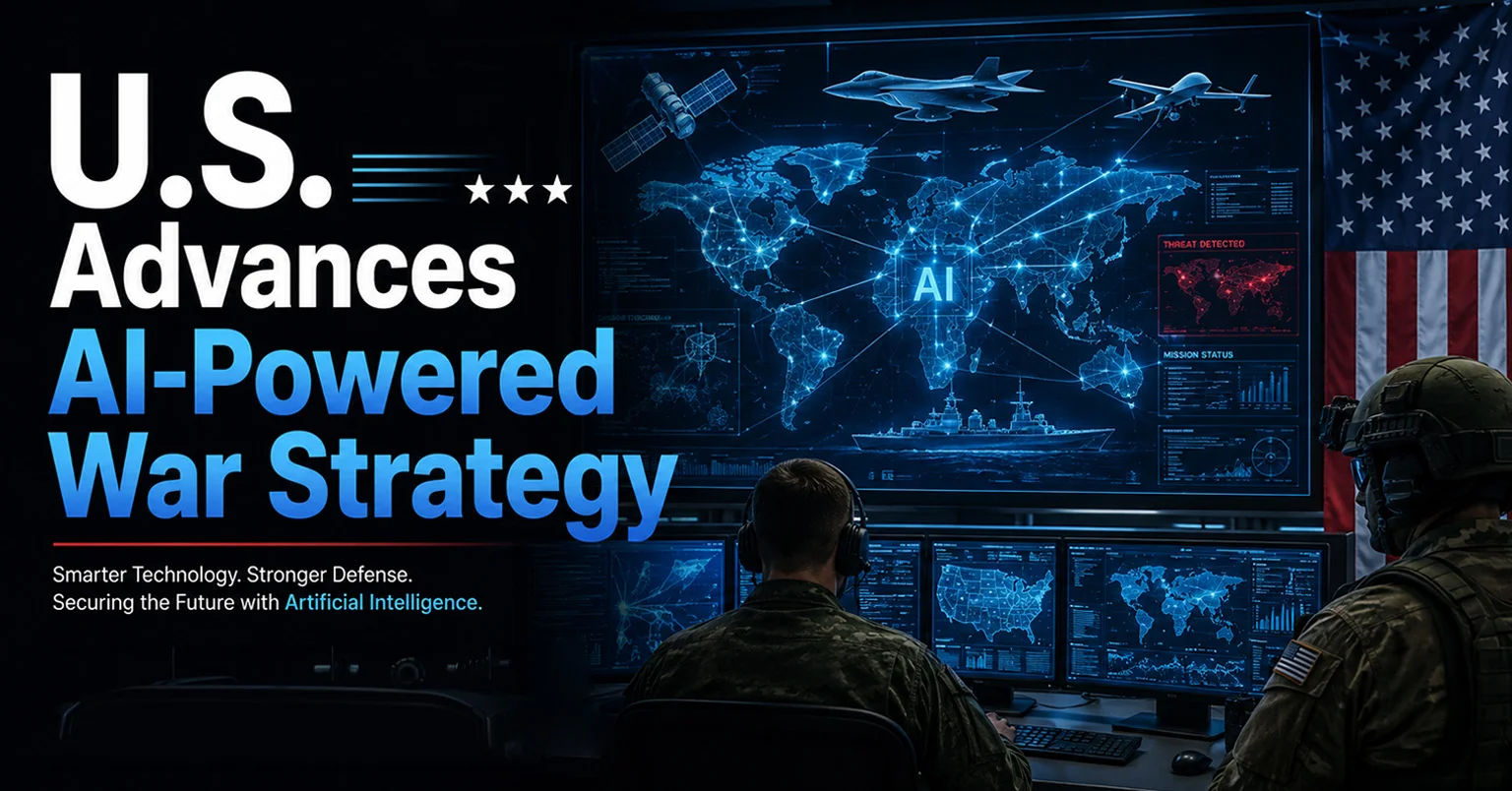
The U.S. military is rapidly integrating artificial intelligence into its operations, including mission planning, intelligence analysis, administrative tasks, and battlefield decision making. In January 2026, the Department of Defense introduced a strategy calling for the military to become “AI first,” meaning, making artificial intelligence a central part of how the armed forces plan and operate.
The strategy includes seven major initiatives focused on combat operations, intelligence, and daily military functions. The Pentagon plans to review progress monthly, with early results expected by July 2026.
Why the U.S. Is Accelerating AI Development
The main driver behind the strategy is competition with China. U.S. defense officials believe that countries with the most advanced AI capabilities will gain a major advantage in future conflicts.
Unlike earlier AI strategies that emphasized caution and oversight, the new approach prioritizes speed, innovation, and reducing bureaucratic delays. Pentagon leaders argue that moving too slowly could create national security risks.
Expanding Military AI Programs
The Pentagon has launched several AI initiatives, including Swarm Forge, Agent Network, and Ender’s Foundry, aimed at improving military planning and decision-making. Programs such as GenAI.mil are designed to provide AI tools to millions of military personnel for everyday tasks. The Department of Defense has also signed agreements worth $200 million each with major AI companies, including Anthropic, Google, OpenAI, and xAI, to support defense operations. However, these partnerships have raised serious legal and ethical concerns.
The Battle Over AI Restrictions
The controversy grew after Anthropic objected to certain military uses of its technology, including mass surveillance and fully autonomous weapons capable of selecting and attacking targets without human involvement.
After Anthropic refused to remove those restrictions, the Defense Department labeled the company a “supply chain risk.” Anthropic challenged the decision in court, sparking a wider debate over how AI should be controlled in national security.
Several lawmakers have called for new legislation to define the limits of military AI use instead of allowing courts to decide these issues case by case.
The Bigger Question: Who Controls AI Warfare?
The debate goes beyond one company or one government agency. As AI becomes more involved in warfare, questions remain about accountability. If an autonomous system makes a deadly mistake, it is unclear whether responsibility should fall on military leaders, AI developers, or technology companies.
AI firms are also gaining influence by setting limits on how their systems can be used, placing them in a unique position between technology providers and policymakers.
Meanwhile, international efforts to regulate autonomous weapons have struggled, with countries unable to agree on common rules and definitions.
The Future of AI in Warfare
The United States is moving quickly to make artificial intelligence a core part of its military strategy, but the legal and ethical rules governing these technologies are still being developed.
As nations compete for AI dominance, the world faces a critical challenge: ensuring that powerful military technologies remain under meaningful human control while addressing the risks of autonomous decision-making in warfare.
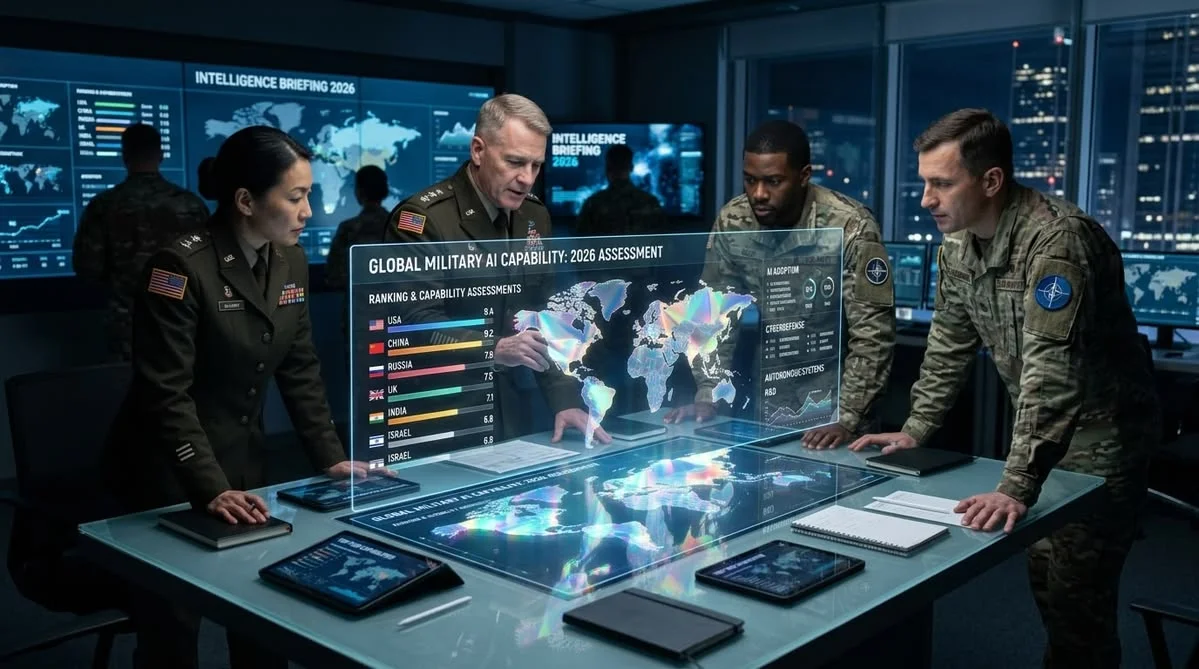
Nations That Have Successfully Deployed AI in Warfare
There is no country that has fully deployed autonomous AI weapons and can be considered a proven “success story” in war. Most militaries are still experimenting with AI-enabled systems, and many governments are cautious because of legal, ethical, and reliability concerns.
Artificial intelligence is reshaping modern warfare by enhancing intelligence gathering, surveillance, decision-making, and autonomous military systems. A few nations have emerged as leaders in applying AI technology on the battlefield.
Ukraine has become one of the most notable examples, using AI-powered drones and battlefield analysis tools in its war with Russia. These technologies come from Ukrainian defense companies and partnerships with international technology firms, improving reconnaissance and targeting capabilities.
Israel has integrated AI into military intelligence, surveillance, and defense systems. Its AI solutions are largely developed by domestic defense companies and help process large amounts of battlefield data for faster decision-making.
The United States has advanced AI warfare through programs such as Project Maven, which uses machine learning to analyze intelligence and drone imagery. These systems are developed through collaboration between the U.S. military, defense contractors, and technology companies