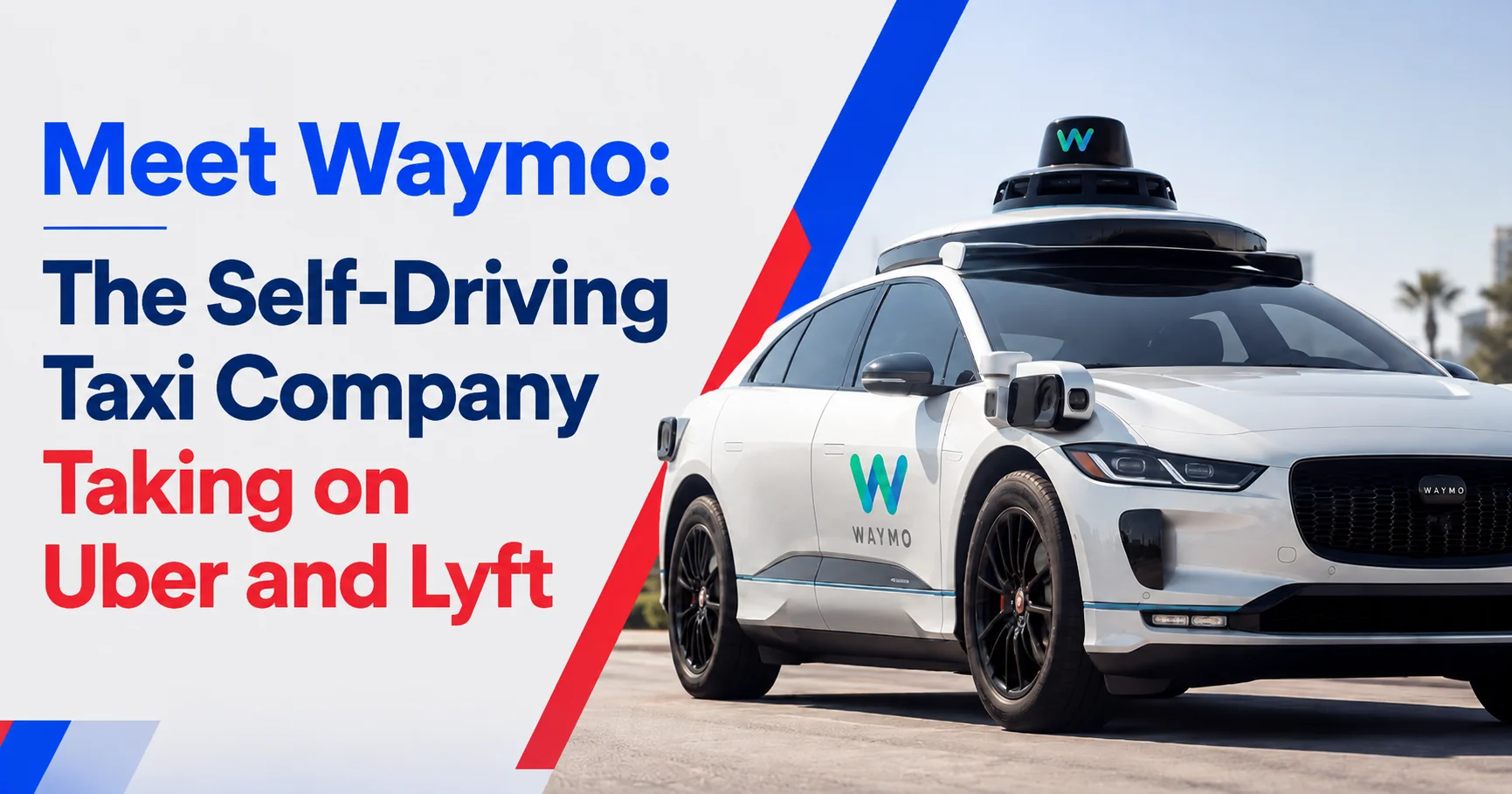
For decades, self-driving cars were considered a technology of the future. Today, that future has arrived through Waymo, Alphabet’s autonomous driving company. Waymo has become the world’s first company to successfully operate a commercial fully autonomous ride hailing service, allowing passengers to request rides in vehicles with no human driver behind the wheel.
Unlike traditional ride sharing companies such as Uber and Lyft, which depend on human drivers, Waymo uses artificial intelligence, advanced sensors, and autonomous driving technology to transport passengers without human control.
From Google Research Project to Autonomous Transportation Leader
Waymo began in 2009 as the Google Self Driving Car Project with a mission to reduce road accidents and create safer transportation. After years of research, testing, and millions of autonomous miles, the project became an independent Alphabet company in 2016.
The biggest breakthrough came on October 8, 2020, when Waymo launched the world’s first fully autonomous commercial ride hailing service in Phoenix, Arizona. For the first time, members of the public could take a taxi-style ride without a safety driver sitting behind the wheel.
Since then, Waymo has expanded its driverless ride service and become the leading company in the autonomous vehicle industry.
Where Is Waymo Operating?
Waymo has expanded beyond Phoenix and now operates commercial fully autonomous ride hailing services across several major U.S. cities. Its current commercial operating areas include:
- Phoenix, Arizona
- San Francisco Bay Area, California
- Los Angeles, California
- Austin, Texas
- Atlanta, Georgia
- Dallas, Texas
- Houston, Texas
- San Antonio, Texas
- Orlando, Florida
- Miami, Florida
The expansion into Dallas, Houston, San Antonio, and Orlando marked a major growth phase for Waymo, bringing its commercial service to 10 metropolitan areas.
Dallas is especially significant because it represents one of Waymo’s largest technology deployments in Texas, bringing fully autonomous vehicles to one of America’s largest metropolitan areas.
How Does Waymo Drive Without a Human?
Waymo vehicles operate using a combination of artificial intelligence, cameras, lidar, radar, and highly detailed digital maps.
The vehicle constantly analyzes its surroundings, detecting other cars, pedestrians, cyclists, traffic signals, and road conditions. The AI system then makes decisions such as when to accelerate, brake, change lanes, or yield to other road users.
Unlike advanced driver assistance systems that still require human supervision, Waymo’s vehicles are designed to operate without a human driver controlling the vehicle.
The Challenges of Removing the Human Driver
Creating a vehicle that can safely replace a human driver is one of the most difficult engineering challenges in the world.
Waymo must handle unpredictable situations such as aggressive drivers, sudden lane changes, pedestrians crossing unexpectedly, construction zones, emergency vehicles, and unusual road conditions.
Weather is another challenge. Heavy rain, fog, extreme heat, and poor visibility can affect sensors and require the autonomous system to make complex decisions.
Another major challenge is public trust. Even when autonomous vehicles perform safely, accidents involving self-driving technology receive significant attention, making safety validation and transparency extremely important.
Is Someone Controlling Waymo Cars Remotely?
No. Waymo vehicles are not remotely driven by humans. During normal operation, the vehicle’s onboard artificial intelligence makes all driving decisions. Waymo does have remote assistance teams that can provide information when the vehicle encounters unusual situations, but these teams do not control the steering wheel, brake, or accelerator.
Is Waymo Making Money?
Yes, Waymo generates revenue through passenger rides using its Waymo One service. However, the company is still heavily investing in expanding its fleet, improving technology, and entering new markets.
Like many technology companies building new industries, Waymo’s focus has been on long-term growth rather than immediate profitability. The company is trying to prove that autonomous transportation can become a scalable business model.
Is Waymo a Competitor to Uber and Lyft?
Waymo is becoming a major competitor to Uber and Lyft because it is targeting the same ride hailing market but with a different business model.
Uber and Lyft rely on millions of independent drivers, while Waymo uses autonomous vehicles that do not require a driver for every trip. If autonomous vehicles become widely adopted, the cost structure of the ride sharing industry could change dramatically.
Interestingly, Waymo has also partnered with Uber in some markets, allowing Uber customers to access autonomous rides through the Uber platform. This shows that the future may include both competition and cooperation between traditional ride sharing companies and autonomous vehicle providers.
Are Waymo Rides More Expensive Than Uber or Lyft?
Waymo rides are not always more expensive than Uber or Lyft. Prices depend on distance, demand, location, and travel conditions.
In some situations, Waymo rides can be similar in price to premium Uber or Lyft services, while in others they may be cheaper or more expensive. As technology scales and operational costs decrease, autonomous vehicles could eventually become more affordable because they eliminate the need for human drivers.
The Future of Autonomous Transportation
Waymo has proven that fully autonomous ride hailing is no longer just an experiment. It is a real commercial service already being used by passengers across multiple American cities.
Although challenges remain, Waymo has established itself as the current leader in autonomous transportation. Its success represents a major milestone for artificial intelligence, robotics, and the future of mobility.
The next decade could see autonomous vehicles transform how people move around cities, reducing transportation costs, improving safety, and changing the way the world thinks about driving.