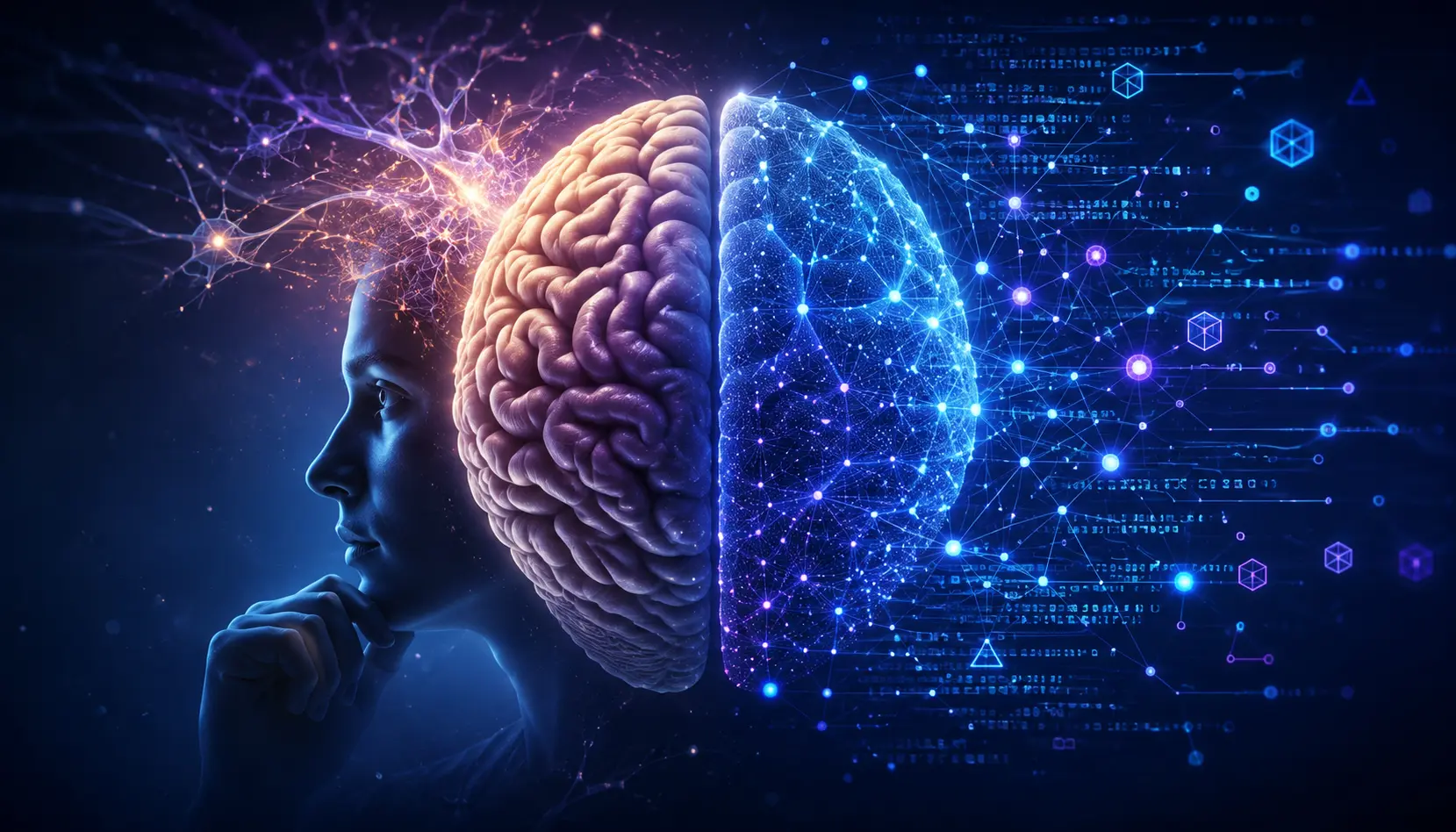
Artificial Intelligence is often described as if it can think, reason, and understand the world like a human. This idea sounds exciting, but it can also be misleading.
Modern AI, especially large language models, does not truly “think” in the human sense. It does not have awareness, emotions, beliefs, or personal understanding. Instead, AI works through advanced pattern matching and statistical prediction.
In simple terms, AI studies huge amounts of data, learns patterns from that data, and then predicts what output is most likely to come next. This is why AI can write articles, answer questions, create images, generate code, and hold conversations that feel intelligent.
However, looking intelligent is not the same as being intelligent.
What Does “AI Pattern Matching” Mean?
AI pattern matching means that an artificial intelligence system identifies relationships in data and uses those relationships to produce an output.
For example, when an AI model is trained on text, it learns how words, sentences, topics, and writing styles commonly appear together. It does not understand language the way humans do. Instead, it learns patterns such as:
- Which words often follow each other
- How questions are usually answered
- How articles are structured
- How code is commonly written
- How images, shapes, and objects are visually connected
When you enter a prompt, the AI does not “think” about your question like a person. It predicts the most likely response based on patterns it has learned during training.
This is why AI can produce impressive answers very quickly. But it is also why AI can sometimes generate incorrect information with confidence.
Why AI Feels Intelligent
AI often feels intelligent because it communicates in a human-like way. It can write clearly, respond quickly, and adjust its tone based on the user’s request.
For many people, this creates the impression that the system understands what it is saying. However, fluency should not be confused with comprehension.
A large language model can generate a well-written paragraph about science, finance, health, or technology without truly understanding those topics. It is producing language that matches learned patterns. It is not experiencing meaning, checking reality, or forming a personal judgment.
Humans naturally connect communication with intelligence. So, when a machine writes like a human, we often assume there is human-like understanding behind it.
But that assumption is not accurate. What is Artificial Intelligence?
AI Predicts — It Does Not Understand
The core function of modern AI is prediction.
When an AI model generates text, it predicts the next word, phrase, or sentence based on probability. When an image model creates a picture, it predicts visual patterns based on the prompt and training data.
This process can be extremely advanced, but it is still not the same as human reasoning.
A human can understand context through memory, emotion, experience, intention, and awareness. Humans can ask why something matters, make ethical judgments, and connect ideas to lived experience.
AI does not do this.
AI does not have personal experience. It does not know whether a statement is true in the way humans understand truth. It does not have goals unless humans provide them. It does not care about outcomes.
It simply generates the output that best fits the pattern.
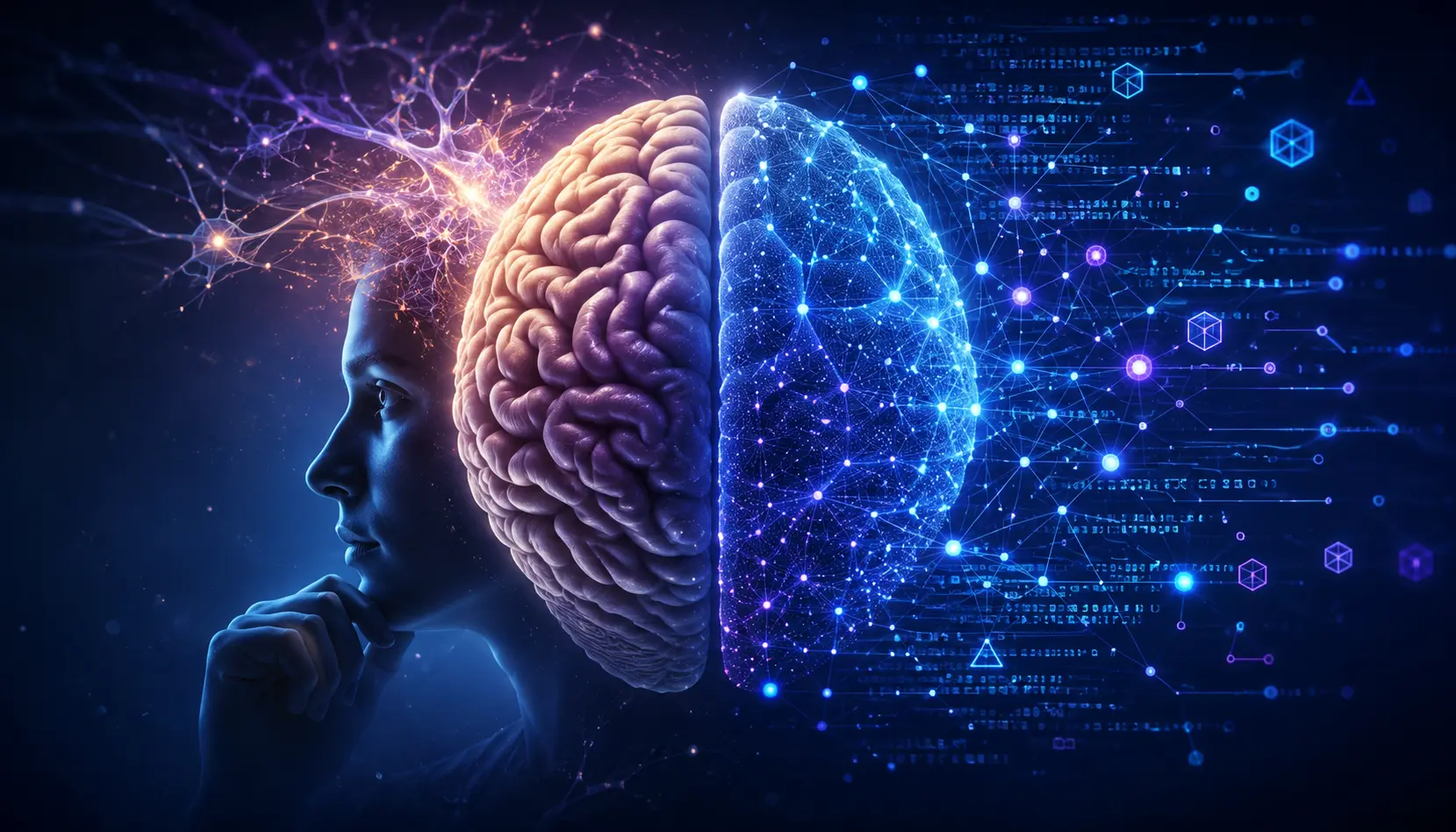
Human Intelligence vs Artificial Intelligence
The difference between human intelligence and artificial intelligence is important.
Human intelligence includes consciousness, self-awareness, creativity, judgment, emotional understanding, and lived experience. Humans can interpret meaning, question assumptions, and make decisions based on values and consequences.
Artificial intelligence, on the other hand, depends on data, algorithms, probability, and statistical relationships.
AI can simulate some parts of intelligence. It can summarize information, detect patterns, generate ideas, and assist with problem-solving. But simulation is not the same as actual understanding.
For example, an AI tool may write a strong business strategy. However, it does not understand the pressure of running a business, the risk of losing money, or the emotional responsibility of managing people.
It can produce useful output, but it does not possess human judgment.
Why This Difference Matters
Understanding the difference between AI and real intelligence is not just a technical issue. It affects how we use AI in daily life, business, education, healthcare, finance, cybersecurity, and many other fields.
If people believe AI truly understands everything it says, they may trust it too much. This can become dangerous in areas where accuracy matters.
AI can make mistakes. It can generate outdated information. It can misunderstand context. It can also create completely false answers that sound professional and convincing.
This problem is often called AI hallucination. It happens because AI is not verifying facts like a human expert. It is generating a response that appears likely based on patterns.
That means human review is still essential.
AI Is Powerful, But Not Perfect
Saying AI is not truly intelligent does not mean AI is useless. In fact, AI is one of the most powerful technologies available today.
AI can help people work faster, learn more easily, automate repetitive tasks, analyse large amounts of information, and generate creative ideas. It can support writers, developers, marketers, researchers, students, business owners, and many other professionals.
However, AI should be treated as a tool, not as an independent decision-maker.
The best use of AI is not to replace human thinking. The best use is to support it.
AI can help you draft content, organise ideas, find patterns, improve productivity, and explore possibilities. But humans still need to check facts, apply judgment, and make final decisions.
The Risk of Over-Relying on AI
One of the biggest risks of AI is over-reliance.
Because AI sounds confident, users may assume its answers are always correct. This is a serious mistake.
In fields like healthcare, law, finance, cybersecurity, and engineering, a wrong answer can cause real harm. If AI is used without expert review, it can lead to poor decisions, security risks, financial loss, or misleading information.
For example, in cybersecurity, AI may help detect suspicious activity. But a trained security professional must still analyse the context and decide what action to take.
In healthcare, AI may help summarise medical information. But it should not replace a doctor’s diagnosis.
In finance, AI may help analyse trends. But it should not be treated as guaranteed investment advice.
AI is useful when it assists humans. It becomes risky when humans blindly follow it.
Is AI Really Creative?
AI can create articles, images, videos, music, designs, and code. This makes many people ask whether AI is creative.
The answer depends on how we define creativity.
AI can combine patterns in new and interesting ways. It can generate fresh-looking content based on existing data. In that sense, it can produce creative results.
However, AI does not create from personal emotion, intention, memory, or experience. It does not have a personal vision. It does not feel inspired. It does not understand beauty, pain, hope, or meaning.
Human creativity comes from experience, emotion, imagination, and purpose. AI-generated creativity comes from pattern recombination.
That does not make AI creativity worthless. It simply makes it different.
The Better Way to Understand AI
Instead of calling AI truly intelligent, it is more accurate to describe it as a large-scale probabilistic system.
This means AI works by calculating probabilities and generating outputs based on learned patterns. It can process data at a scale no human can match, but it does not understand the world like a person.
A better way to think about AI is this:
AI does not think. AI predicts.
This simple distinction helps us use AI more responsibly.
When we understand that AI is based on pattern matching, we become more careful with its outputs. We verify important information. We use human judgment. We avoid treating AI as an authority.
The Future of AI Is Human-AI Collaboration
The future of AI should not be framed as machines replacing human intelligence. Instead, the future should be about human-AI collaboration.
AI can help humans work faster and smarter. It can reduce repetitive tasks, support decision-making, and open new creative possibilities. But it should remain guided by human values, ethics, and responsibility.
The most successful people and businesses will not be those who blindly trust AI. They will be those who understand its strengths and limitations.
AI is powerful because it can detect and reproduce patterns at massive scale. But humans are powerful because they can understand meaning, apply judgment, and take responsibility.
The future belongs to people who know how to combine both.
Conclusion
AI is impressive, but it is not intelligent in the same way humans are.
Modern AI does not think, feel, understand, or experience the world. It works through advanced pattern matching and statistical prediction. It can generate useful and convincing outputs, but it does not possess awareness or true comprehension.
This does not reduce the value of AI. Instead, it gives us a clearer way to use it.
AI should be seen as an assistive tool, not a replacement for human intelligence. It can support our work, improve productivity, and expand what we can do. But human judgment must remain at the centre.
AI does not think — it predicts.
And understanding that difference is essential for using AI wisely.
1 thought on “AI Isn’t Intelligent : It’s Advanced Pattern Matching”