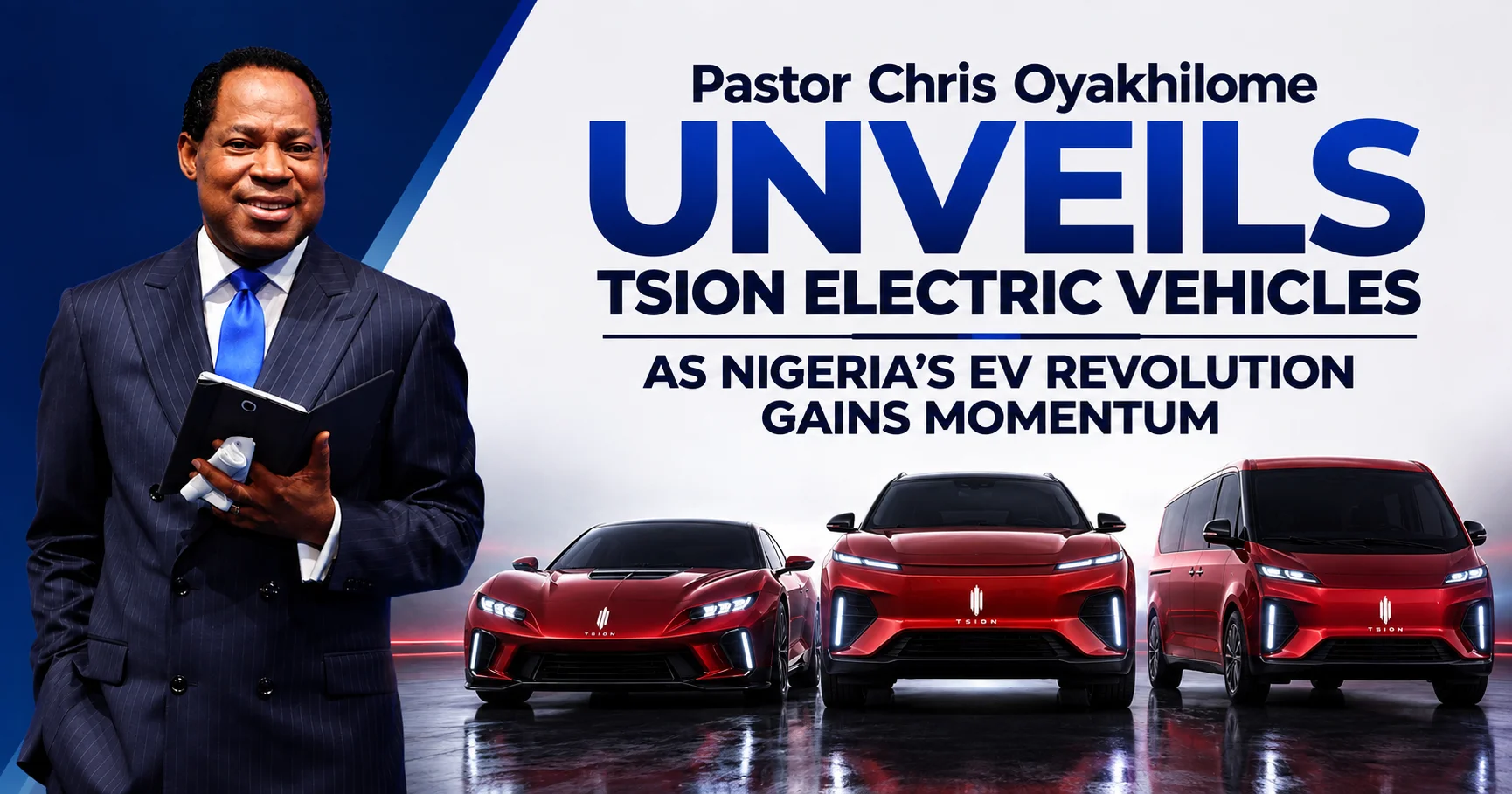
Nigeria’s emerging electric vehicle industry has received an unexpected boost with the unveiling of a new electric vehicle initiative linked to Pastor Chris Oyakhilome and the Christ Embassy and LoveWorld ecosystem.
The vehicles were unveiled at The New Economy Unveiling 2026, an event focused on innovation, technology and economic development. The presentation has attracted considerable attention, introducing a new automotive brand at a time when Nigeria is increasingly exploring alternatives to petrol-and diesel-powered transportation.
Introducing Tsion
The vehicles are being presented under the Tsion brand. Several models were showcased during the unveiling, including the Tsion Passion, Tsion Falcon, Vision Series, Vision Coupe and OG Series.
The names have generated interest, particularly the OG Series. During the presentation, Pastor Chris explained that “OG” stands for “Of God.”
However, detailed technical information about the vehicles is still limited. Public information has not yet confirmed specifications such as battery capacity, driving range, charging time, motor performance, pricing or planned production volumes. These details will be important in determining how competitive the vehicles could become in Nigeria’s developing electric mobility market.
Why the Electric Vehicle Initiative Matters
Nigeria has traditionally depended heavily on petrol- and diesel-powered vehicles for transportation. Rising fuel costs, pressure on household incomes and growing environmental concerns have increased interest in alternative forms of transportation.
Electric vehicles offer one potential solution by replacing conventional internal combustion engines with electric power.
The timing of the Tsion unveiling is particularly significant because Nigeria’s electric vehicle sector is already gaining attention. Local manufacturers are exploring electric vehicle production, while businesses and policymakers are increasingly discussing the infrastructure required to support wider adoption.
For example, Innoson Vehicle Manufacturing has developed locally produced electric vehicles, including the IVM Link, IVM EX01 and IVM EX02, while also highlighting the importance of charging infrastructure for electric mobility.
The emergence of another Nigerian linked electric vehicle initiative could further increase public awareness and encourage investment in the country’s growing electric mobility sector.
More Than Just an Electric Car
The significance of Tsion could extend beyond the vehicles themselves.
Building a successful electric mobility industry requires much more than manufacturing cars. Nigeria will need charging stations, battery technology, trained technicians, maintenance networks, software systems, financing options and a reliable electricity supply.
If the Tsion project progresses into commercial production, it could create opportunities across several areas of the automotive and technology industries. It could potentially support new jobs, technical training, manufacturing activities and support businesses.
At the same time, it is important to distinguish between the potential of the initiative and confirmed plans. Details concerning employment, manufacturing facilities, partnerships and investment commitments have not yet been publicly established.
Where Will the Tsion Vehicles Be Manufactured?
One of the biggest questions surrounding the project is where the vehicles will be manufactured. Although the vehicles have now been publicly unveiled, there is not yet enough verified information to identify a dedicated Tsion manufacturing plant or mass production facility in a specific Nigerian city.
This distinction is important. An unveiling does not necessarily mean that large scale commercial production has already begun.
As additional information becomes available about manufacturing locations, assembly operations, supply chains, dealerships and charging infrastructure, the true scale of the Tsion project should become clearer.
Nigeria’s Electric Vehicle Market Is Growing
Tsion enters a Nigerian market that remains relatively young but is attracting increasing interest. Companies such as Innoson have demonstrated that locally produced electric vehicles are possible, while government policies and private sector investment are gradually contributing to the development of electric mobility in the country.
Nigeria’s biggest challenge, however, may not simply be producing electric vehicles. The country must also develop the infrastructure required to support them.
Widespread electric vehicle adoption will depend on reliable charging networks, technicians trained to work with high voltage systems, access to spare parts, battery servicing and affordable financing.
Without these supporting systems, even a well engineered electric vehicle could face significant challenges in achieving widespread adoption.
The Questions Nigerians Will Be Asking
Interest in the Tsion unveiling is likely to continue growing, but several important questions remain unanswered.
How much will the vehicles cost? Where will they be manufactured? What driving range will they offer? When will they become available to the public? Will charging stations be established across major Nigerian cities? And can production eventually scale enough to compete with established automotive manufacturers?
The answers to these questions will determine whether Tsion develops into a significant player in Nigeria’s automotive industry or remains, for the time being, an innovation showcase.
A New Chapter for Nigerian Innovation
Pastor Chris Oyakhilome’s unveiling of the Tsion electric vehicle lineup marks an interesting development in Nigeria’s growing automotive and technology sector.
The Tsion Passion, Tsion Falcon, Vision Series, Vision Coupe, and OG Series enter the market at a time when Nigeria is increasingly embracing electric mobility and exploring cleaner transportation solutions.
The bigger question now is whether Tsion can progress from unveiling to commercial production and widespread adoption. Competitive pricing, reliable charging infrastructure, accessible spare parts, and strong after-sales support will be critical to its success.
If these challenges are effectively addressed, Tsion could become a notable contributor to Nigeria’s emerging electric vehicle ecosystem and further accelerate interest in the country’s transition toward electric mobility.